
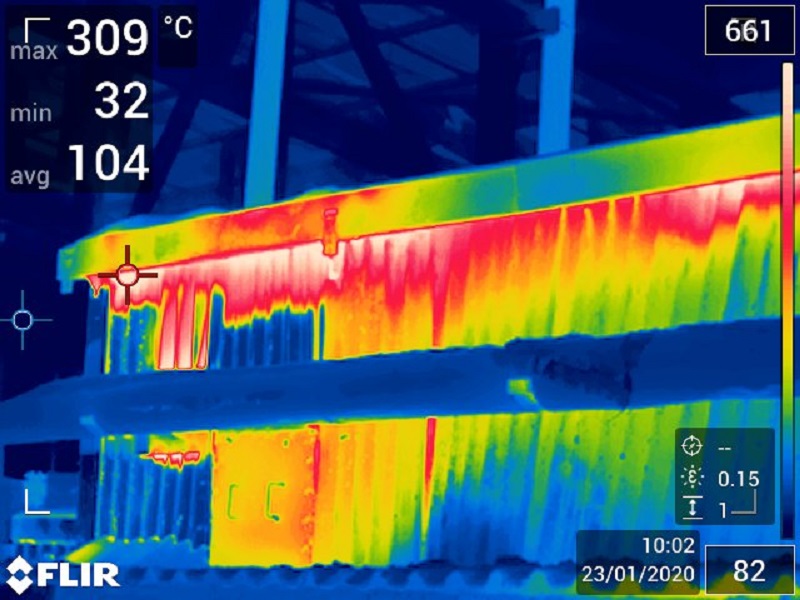
What Steam Lagging Surveys Identify
Steam and condensate systems operating with degraded or missing insulation waste significant energy and create burn hazards to personnel. Thermography provides a rapid, non-contact survey of the entire distribution network.
- Missing, collapsed, or wet lagging on steam distribution pipework
- Boiler casing hot-spots indicating refractory or insulation failure
- Steam trap failures — both passing (open) and locked-closed conditions
- Flanged joint insulation gaps and valve body heat loss
- Condensate return line insulation deterioration
- Process vessel and storage tank heat loss mapping
- Personnel burn-risk identification on accessible pipe runs
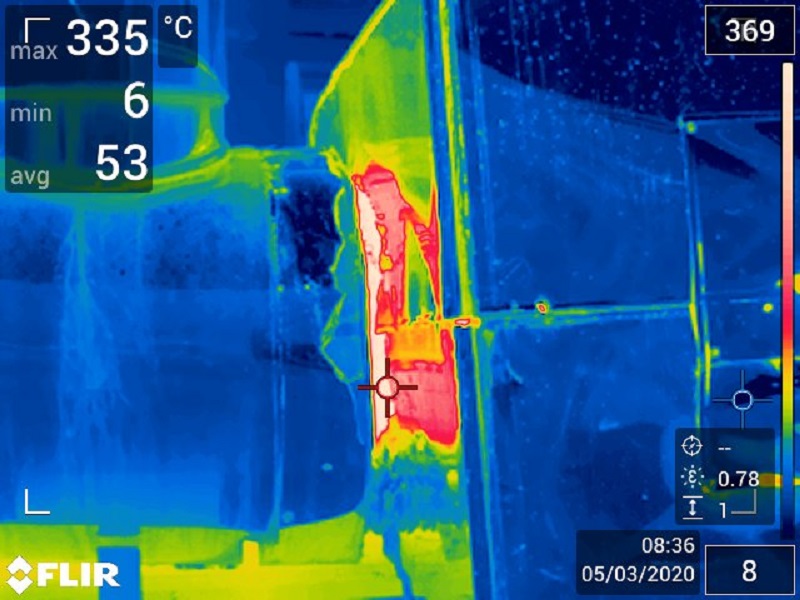
Energy Balance Integration
Steam lagging surveys can be extended into a full Energy Balance Audit, where thermographic data is combined with engineering calculations to quantify heat loss in kW and annualised Rand value.
Pipe surface temperature, pipe diameter, lagging thickness, and ambient conditions are used to calculate heat flux (W/m²) per identified fault — aggregated to give total avoidable heat loss across the system.
Surveys are suitable for ISO 50001 energy management audits, insurance risk assessments, and maintenance planning.
System Types Covered
Steam Distribution Pipework
Full pipe run survey identifying lagging voids, wet insulation, and mechanical damage on high and low pressure systems.
Boilers & Pressure Vessels
Casing hot-spot mapping, flue gas path tracing, and refractory integrity assessment.
Steam Traps
Identification of passing traps (continuous steam loss) and cold traps (blocked or failed) across the distribution network.
Process Furnaces & Ovens
Refractory hot-spot mapping, door seal assessment, and hearth integrity evaluation.
Hot Water Systems
Insulation failures on HWAS and process hot water distribution, including lagged valve bodies and flexible connections.
Condensate Return Systems
Return line insulation gaps and flash vessel thermal mapping to reduce condensate heat loss.